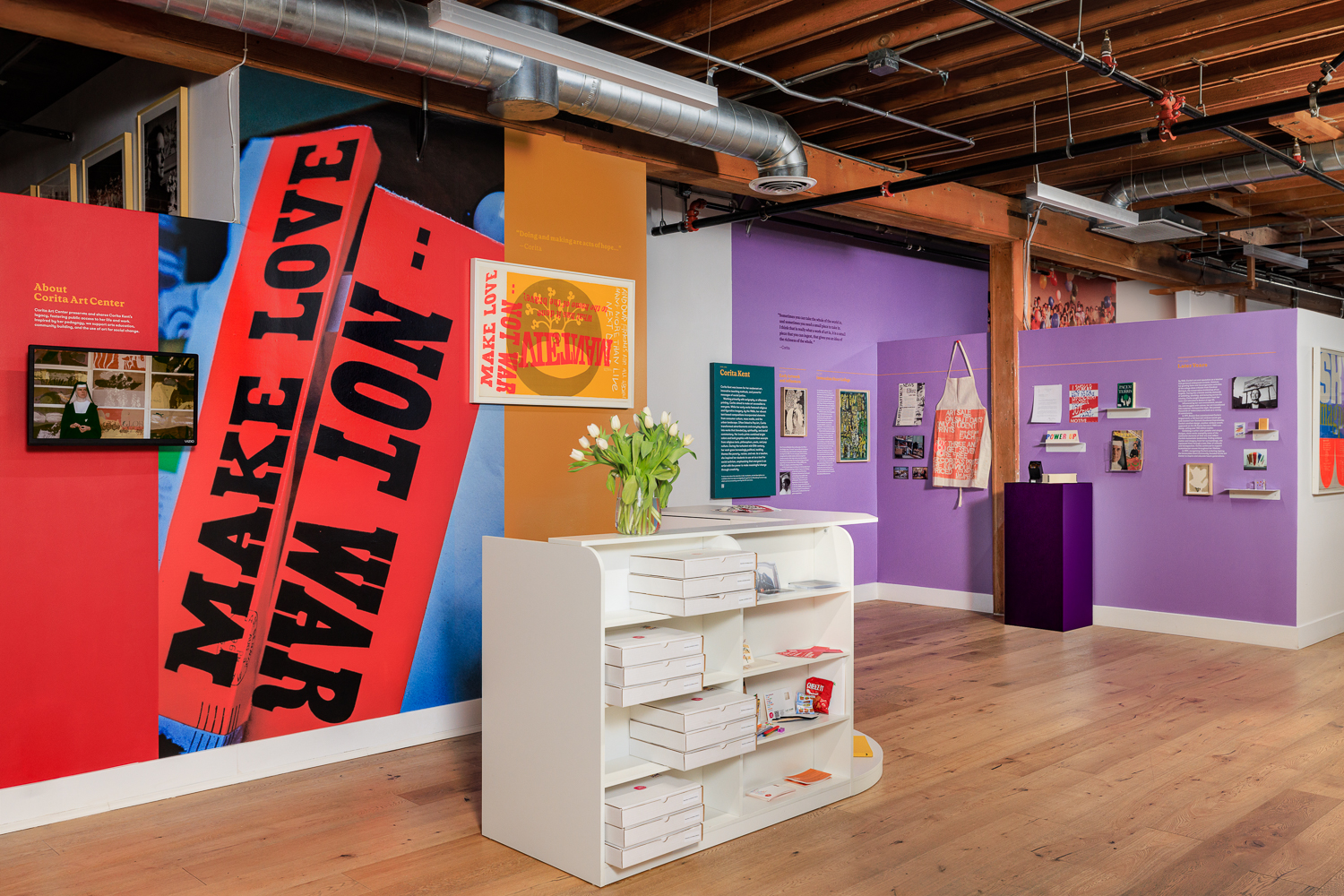
Unordinary Days: Celebration as Resistance
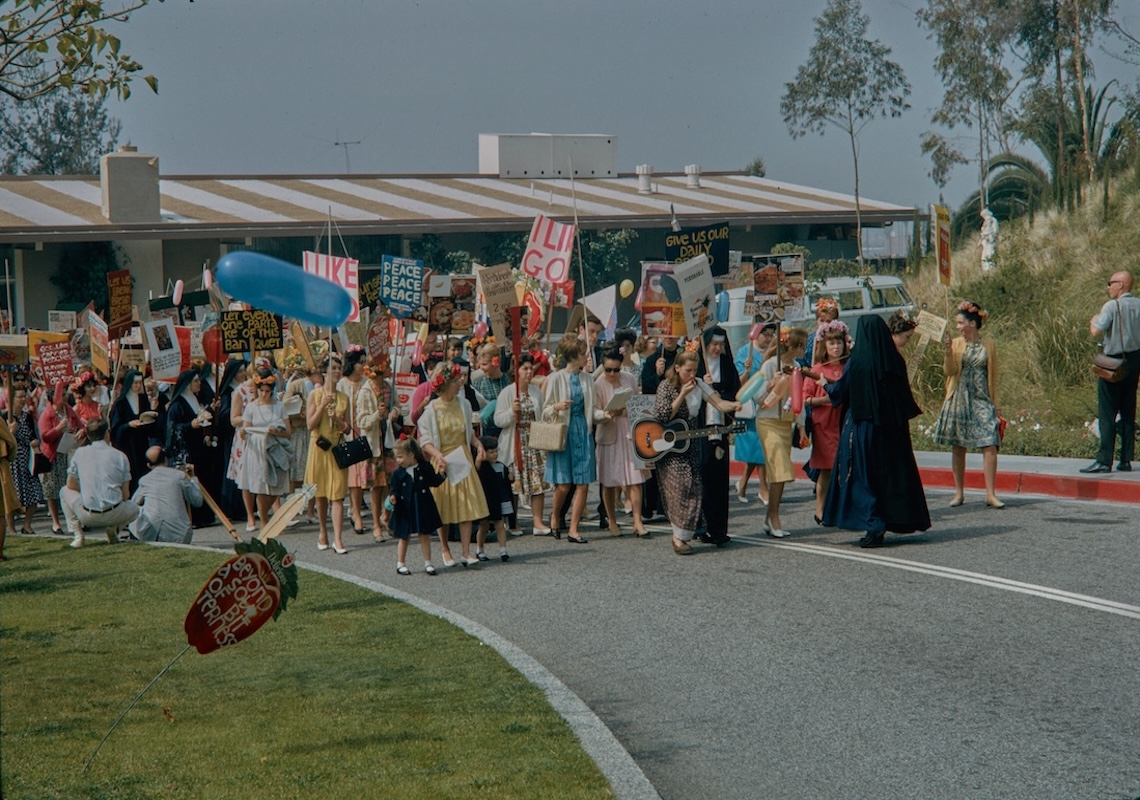
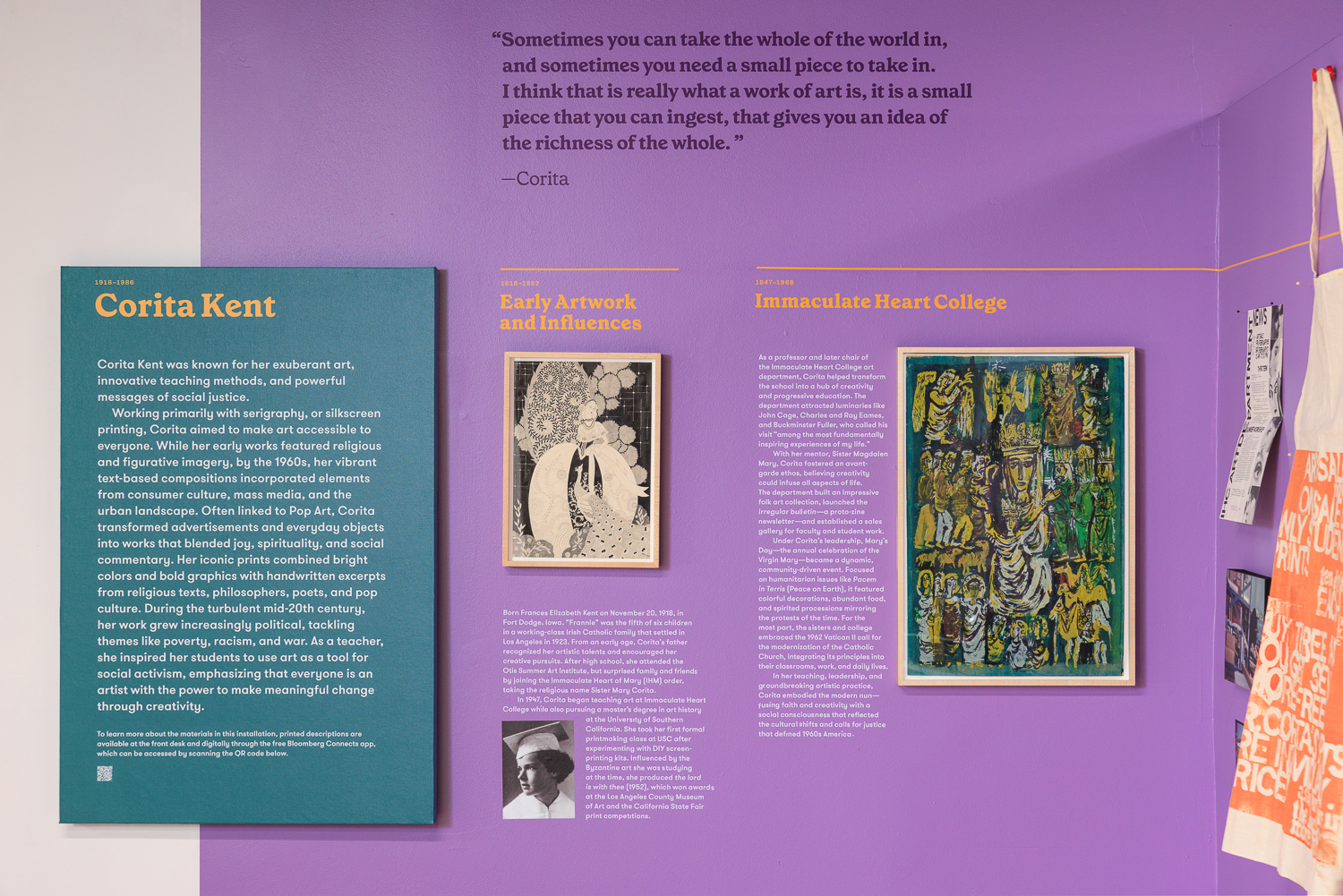
“I think celebrations are always meant to instruct and inspire, to empower people to use their own creative skills through images and ritual to action.” - Corita Kent
Amid the social, political, and religious upheavals of the 1960s, Corita and the Immaculate Heart College reimagined celebration as a transformative space for joy and collective action. In the shared work of making, planning, and preparation, it gave rise to artistic experimentation and a deeper sense of community.
These ideas found their most vivid expression in the college’s annual Mary’s Day events. Rooted in Catholic tradition, the usually reverent Spring observance had long been part of campus life. In the early 1960s, however, the college began to reconsider what this ritual might mean in a rapidly changing world.
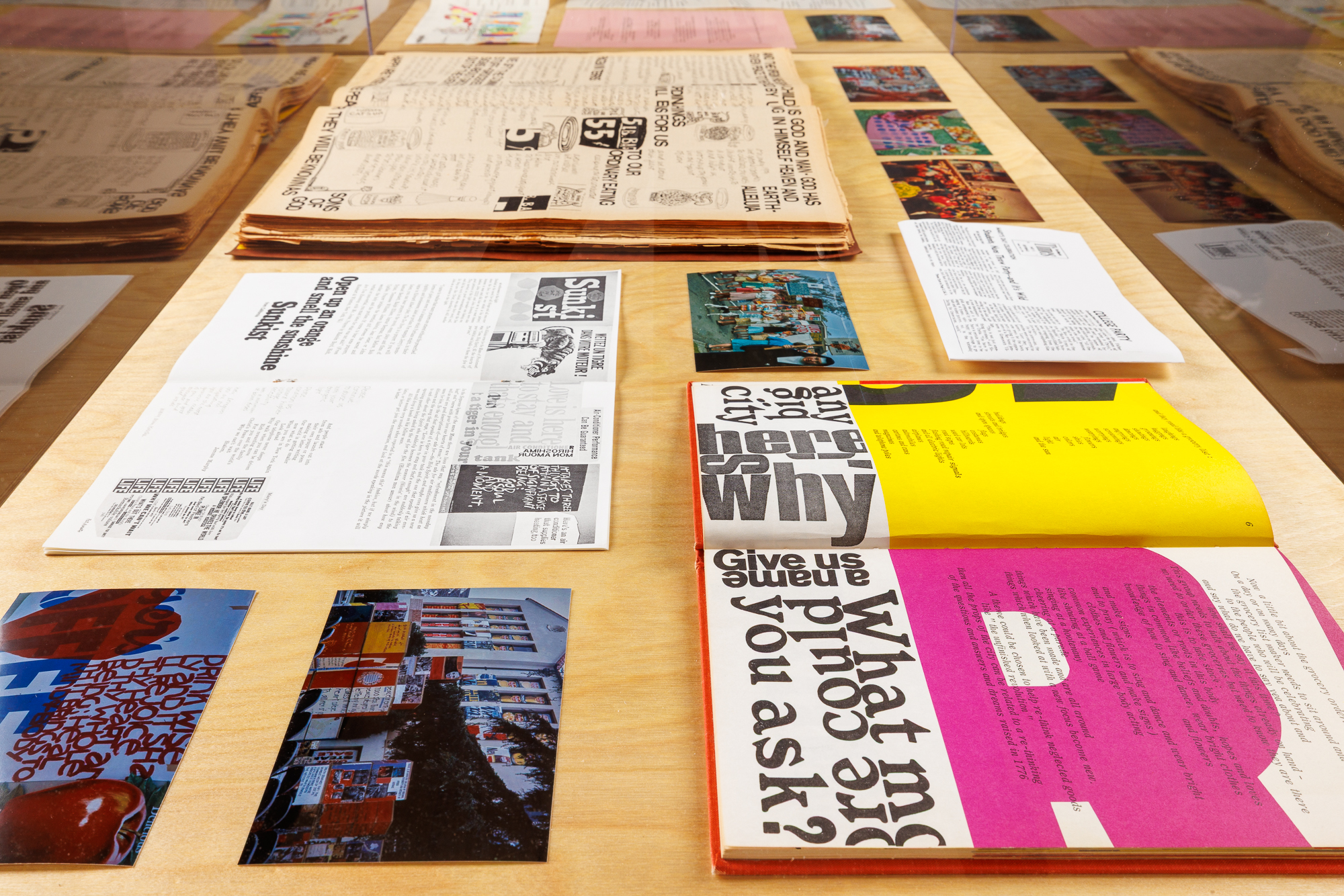
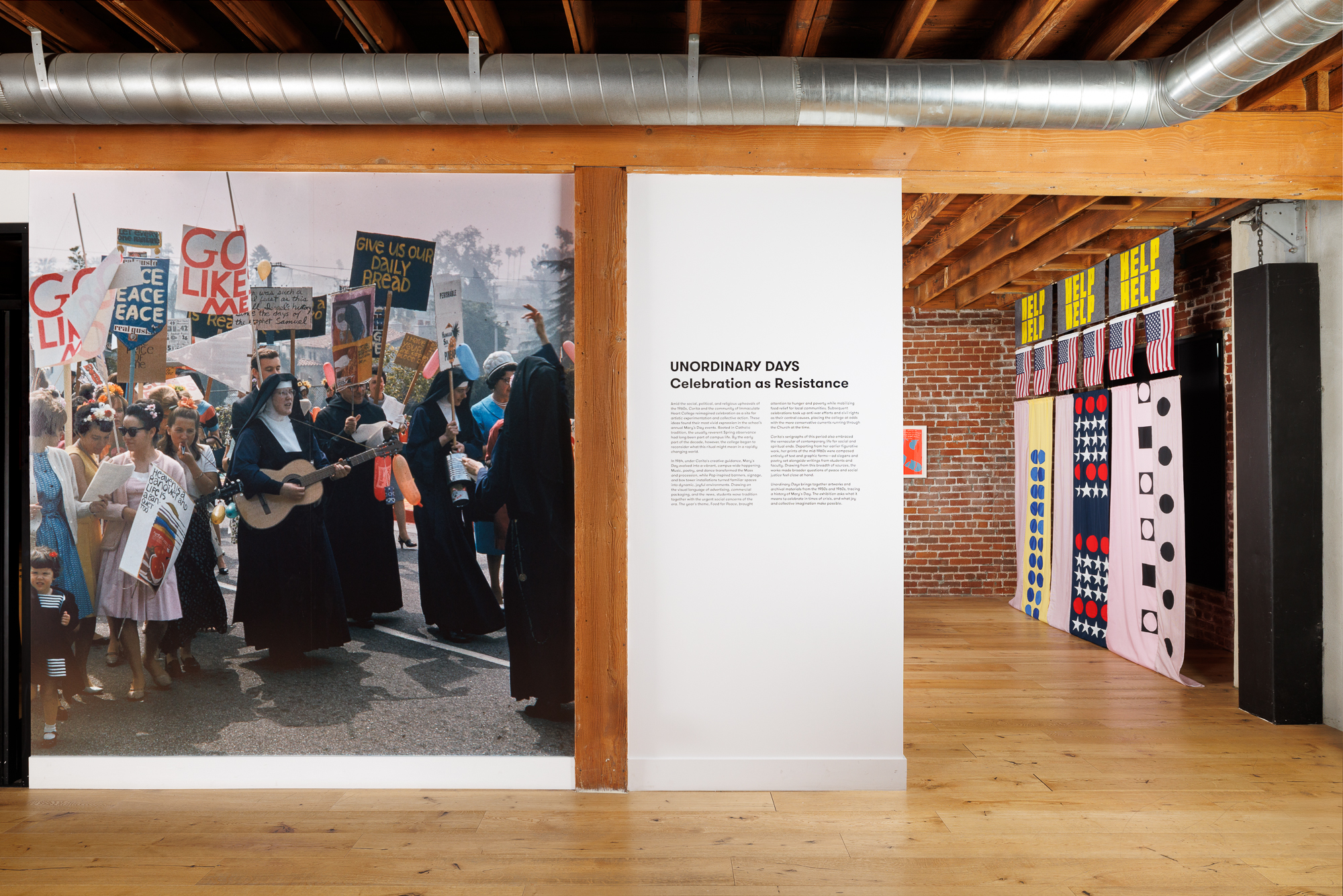
In 1964, under Corita's creative guidance, Mary's Day evolved into a vibrant, campus-wide happening. Music, poetry, and dance transformed the Mass and procession, while Pop-inspired banners, signage, and box tower installations turned familiar spaces into dynamic, joyful environments. Drawing on the visual language of advertising, commercial packaging, and the news, students wove tradition together with the urgent social concerns of the era. The year's theme, Food for Peace, brought attention to hunger and poverty while mobilizing food relief for local communities. Subsequent celebrations took up anti-war efforts and civil rights as their central causes, placing the college at odds with the more conservative currents running through the Church at the time.
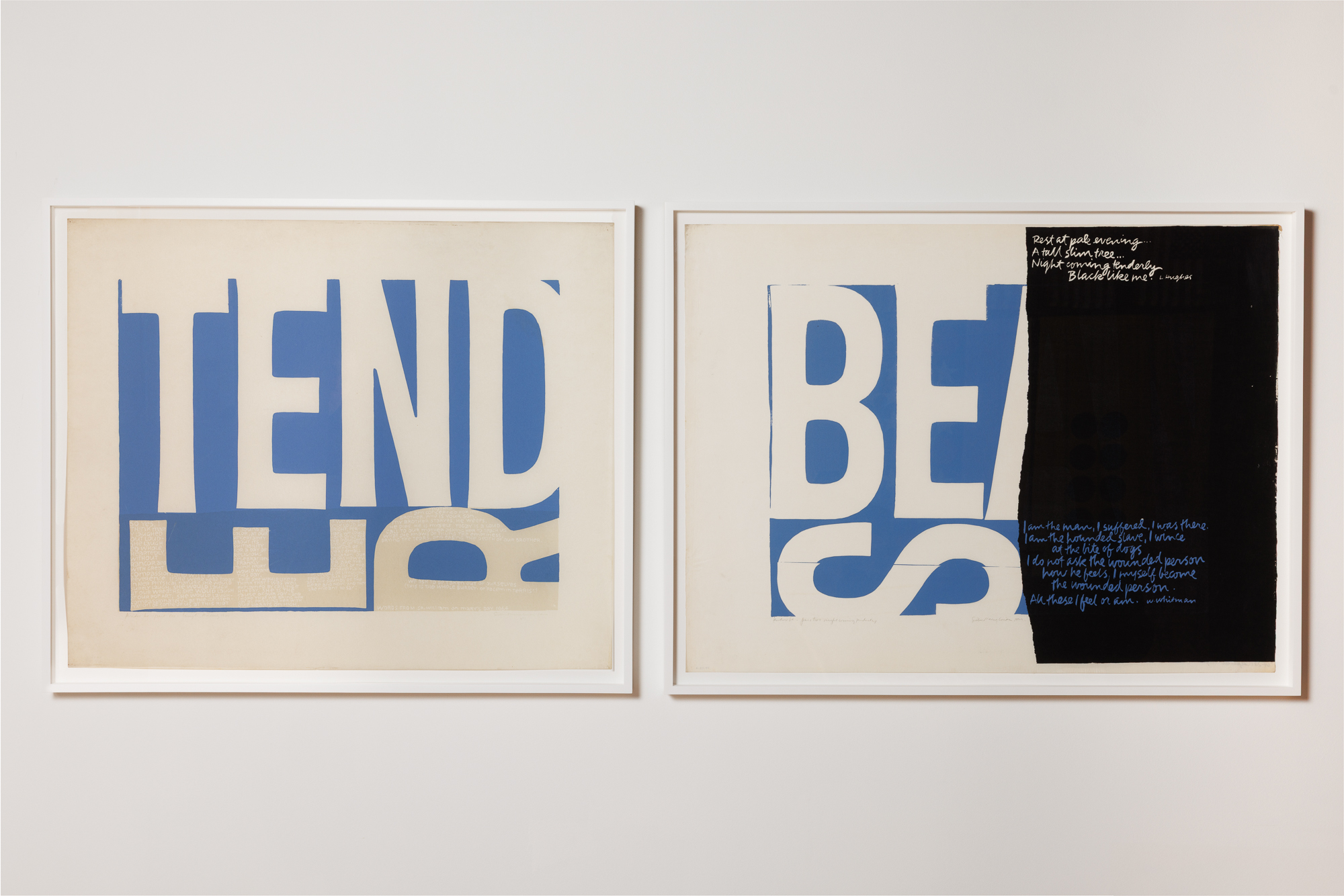
Corita's serigraphs of this period also embraced the vernacular of contemporary life for social and spiritual ends. Departing from the figurative imagery of her earlier work, her prints of the mid-1960s were composed entirely of text and graphic forms—ad slogans and pop songs set alongside poetry and the writings of her students and fellow sisters. Drawing from this breadth of sources, the works made broader questions of peace and social justice feel close at hand. The same sensibility reshaped her treatment of the Virgin Mary: rather than invoking established iconographic tradition, Corita rendered her through language—as a figure who "laughed out loud" and "shopped at the Market Basket."
Unordinary Days brings together rare artworks and archival materials from the 1950s and 1960s that trace a poignant history of Mary's Day and the community that gave it life. The exhibition asks what it means to celebrate in times of crisis, and what joy and collective imagination make possible.
.jpg)